• Home
  • About Us
  • Contact
  • Home
  • About Us
  • Contact

Evolution of gaming technology

The evolution of gaming technology has been a fascinating journey, marked by significant advancements in hardware, software, graphics, gameplay mechanics, and player experiences. Here's a broad overview of how gaming technology has evolved over the years:

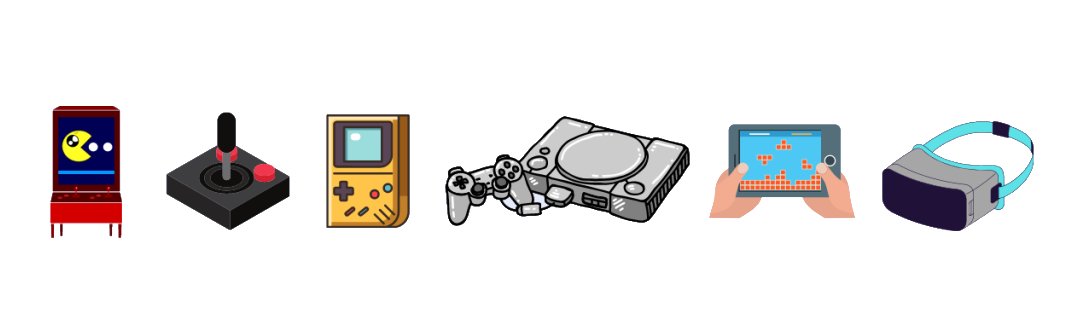
1.  Early Years (1950s-1970s):
   
    .The earliest electronic games were simple and primarily based on analog technology.
    .Games like "Pong" (1972) popularized arcade gaming and laid the foundation for the industry

2.  Home Consoles and Personal Computers (1980s-1990s):

  . The introduction of home consoles like the Atari 2600, Nintendo Entertainment System (NES), and Sega Genesis brought gaming into households.
  .Personal computers also emerged as gaming platforms, with advancements in graphics and sound capabilities.
  .Game genres diversified, including platformers, adventure games, and early role-playing games (RPGs).

3.  3D Graphics and CD-ROM (1990s):

  .The shift to 3D graphics revolutionized gaming with titles like "Wolfenstein 3D," "Doom," and "Quake."
  .The introduction of CD-ROMs allowed for larger storage capacity, enabling more complex games with full-motion video and voice acting.

4.  Console Wars and Handheld Gaming (Late 1990s-2000s):
 
  .Intense competition between consoles like the Sony PlayStation, Nintendo 64, and Sega Saturn drove innovation in graphics and gameplay.
  .Handheld gaming saw significant advancements with devices like the Game Boy, Game Gear, and later, the Nintendo DS and Sony PSP.

5.  Online Gaming and Connectivity (2000s):
 
  .The proliferation of broadband internet facilitated online multiplayer gaming, leading to the rise of  MMORPGs like "World of Warcraft" and competitive games like "Counter-Strike."
  .Consoles integrated online capabilities, enabling players to connect and compete globally.

6 .​ High-Definition Era (2000s-2010s):

  .High-definition (HD) graphics became standard with the release of consoles like the Xbox 360, PlayStation 3, and later, the PlayStation 4 and Xbox One.
  .Motion control technology (e.g., Wii Remote, Kinect, PlayStation Move) introduced new ways to interact with games.
  .Mobile gaming saw explosive growth with smartphones and tablets, offering a wide range of games from casual to hardcore experiences..

7.   Virtual Reality (VR) and Augmented Reality (AR) (2010s-present):

  .VR headsets like the Oculus Rift, HTC Vive, and PlayStation VR immersed players in virtual worlds, providing unprecedented levels of immersion.
  .AR games, popularized by titles like "Pokémon Go," merged digital and real-world environments.
  .Cloud gaming services like Google Stadia and NVIDIA GeForce Now began to emerge, allowing players to stream games over the internet.

8.    Next-Generation Gaming (2020s and beyond):

  .Continued advancements in hardware, including ray tracing, faster loading times (SSDs), and 8K resolution support.
  .Enhanced AI capabilities for more dynamic and realistic in-game experiences.
  .Increasing integration of gaming with other technologies like artificial intelligence, blockchain, and cloud computing.

The evolution of gaming technology is an ongoing process, driven by innovation and the demand for more immersive and engaging experiences. As technology conti​nues to evolve, so too will the possibilities for gaming.

contact us

Quick Contact

 +995 551 50 19 94  [email protected]

Developers

Developer Page

© SkangoGames LLC 2022, All rights reserved.